
What actually grows in a north-facing flat, a bathroom or an office
This page is for anyone matching a plant to a room that gets little daylight, high humidity or dry heating.
Read the care guides for the plants that cope best with low lightLiving with a north-facing window
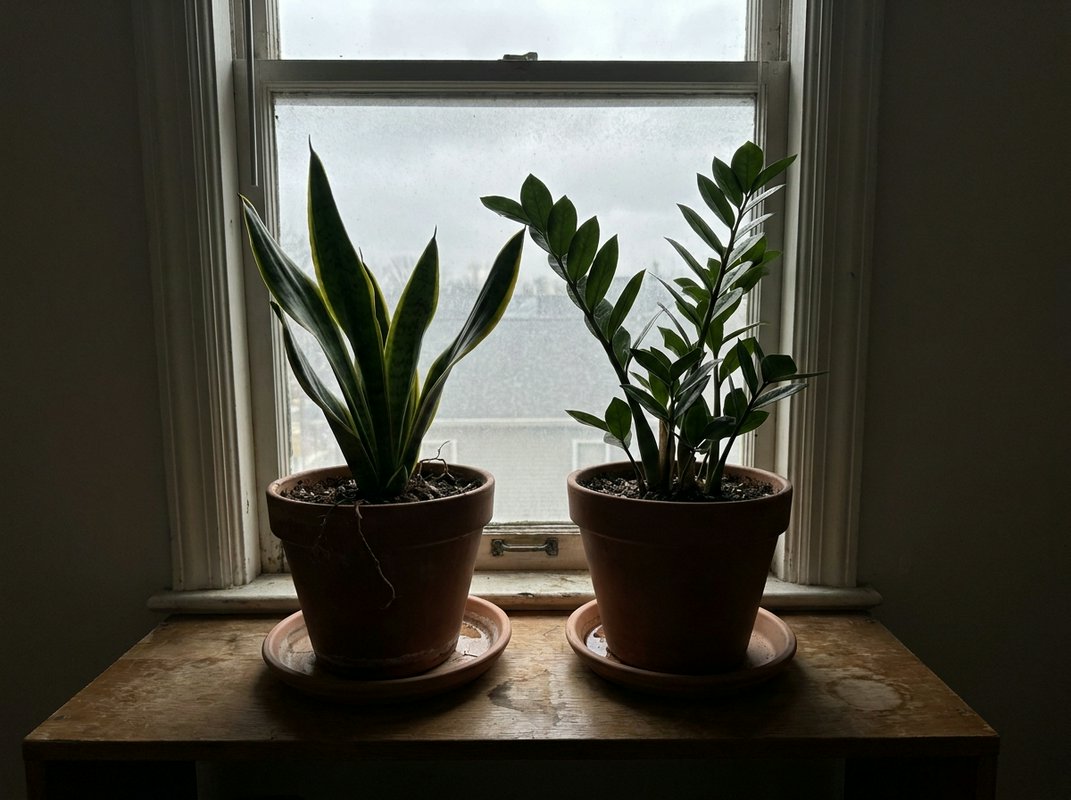
A north-facing window never gets direct sun. What it gives you instead is a steady, even light that stays roughly the same all day, but at much lower intensity than an east or west window gets even on a dull afternoon. In a British winter, with the sun low and daylight short, a north-facing room can fall to a few hours of weak indirect light, and many flats add a second problem on top: a window overshadowed by the building opposite, net curtains left permanently closed, or a room set back from the glass.
What copes, and what does not
Plants that evolved under forest canopy are the ones that manage here, because low, diffuse light is the condition they already grow in. A snake plant, a cast iron plant (Aspidistra) and most parlour palms will hold steady through a dim winter without complaint. A fiddle leaf fig or most flowering plants will not: they will drop leaves, stretch thin and pale, or simply stall, because they are asking for light the room cannot give them. The fix is not a brighter plant food or a different watering routine. It is choosing a plant suited to the light you actually have, which you can read about in more detail in the monstera care guide if you are weighing a monstera against lower-light alternatives for the same spot.
Watering changes when light drops
Less light means slower growth, and slower growth means the compost stays wet for longer between waterings. A plant that needed water weekly on a bright sill in summer might only need it every two to three weeks in a dim winter room, and watering on the old schedule is the most common way a low-light plant is lost. Check by pushing a finger 3 to 4 cm into the compost.
Choosing the pot for a slow-growing plant
A plant that is barely drinking needs a pot that does not hold damp soil against its roots any longer than necessary. A sealed ceramic pot with no hole is the wrong choice here unless it is used as an outer cover for a plastic liner you can lift out and check, because otherwise there is nowhere for surplus water to go. Terracotta, which pulls moisture out of the soil as it dries, suits a low-light room well for the same reason it suits an overwaterer: it gives you a margin for error the glazed alternative does not. You can read how each material behaves in the planter material guide, and work out what drainage setup a specific decorative pot needs in the drainage guide.
What a bathroom gives a plant, and what it takes away
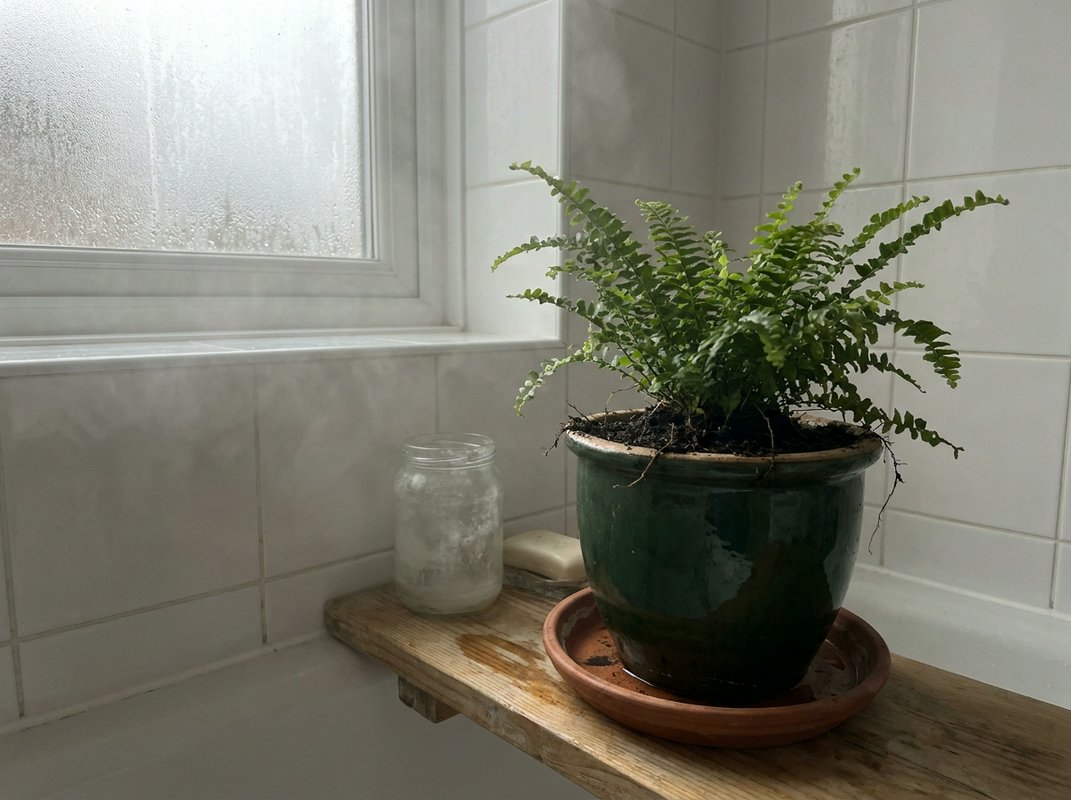
A bathroom gives a plant one thing most rooms in a British flat don't manage: humidity that stays high without any effort from you, topped up by every shower and bath you run. What it usually takes away is a proper window. The plants worth keeping in there are the ones built around that trade, not working against it.
Peace lilies, calatheas and most orchids come from forest floor conditions where the air stays damp and direct sun rarely reaches that low. A bathroom recreates the damp half of that without you doing anything, which is why these plants often do better on a bathroom shelf than on an open windowsill elsewhere in the same flat. None of them need a bright window to get by; borrowed light from an open door, or a bulb left on through the day, usually keeps them ticking over. None of them will manage in total darkness either, so a bathroom with no window at all still needs some light source reaching the pot.
Terracotta works against a bathroom. The clay is porous, and that's usually the point: moisture in the compost evaporates out through the walls, which helps if you're prone to overwatering in a normal room. In a bathroom, the air's own humidity slows that evaporation right down, so you lose the drying effect terracotta is sold on, while the plant still wants consistently moist compost. A glazed ceramic pot, or a self-watering planter with a wick system, holds moisture far more evenly, which suits a peace lily or calathea better than a pot designed to fight the damp air around it.
Drainage matters more here than in most rooms, because a saucer standing in water in a small, poorly ventilated space is exactly where root rot starts. The drainage guide covers how to run a sealed decorative pot safely with a liner. For watering and light specific to each plant, the peace lily care guide and the calathea care guide go through the detail a bathroom's conditions actually call for.
Low light versus medium light, and the plants that actually cope
A hallway with no window and a room three metres back from a north-facing one are not the same kind of dark, and most plant labels do not bother to tell them apart. Call anything less than bright an ambient wash of "low light" and you end up with a snake plant that survives next to an orchid that slowly starves, in the same spot, on the same advice.
How to tell real low light from medium
A rough test that holds up better than most labels: stand where the plant will sit and see whether you can read a paperback without putting a lamp on, at the time of day you are usually in the room. If you can, read easily and the text has colour in it, that is medium light, and a wider range of houseplants will manage there. If the page is grey and you are squinting, that is the low light this section means, and the plant list genuinely narrows.
Distance from the window does more damage than most people expect. Light falls off sharply as you move back, so a spot that looks bright from the doorway can be genuinely dim once you are standing where the plant pot actually goes. A room facing north compounds this through a British winter, when the sun barely climbs and the days are short to begin with.
The plants that actually cope with deep shade
Most of what gets marketed as a "low light plant" is really a medium light plant that will not die quickly in the dark, which is a different claim. A shorter group genuinely holds its growth in the gloom:
- Snake plant (Sansevieria), which stores water in its leaves and tolerates long stretches with almost no direct light, though it will grow slowly and will not forgive constantly soggy soil on top of the dark
- ZZ plant, which comes from deep shade in its native range and handles a windowless hallway better than almost anything else sold as a houseplant
- Cast iron plant (Aspidistra), slower-growing again but reliably tolerant of rooms other plants give up in
Pothos and peace lily sit a step below these. Both will survive low light for a while, but they grow leggy, flower poorly or stop growing altogether rather than thriving, and both do noticeably better once they get the medium light described above. The peace lily in particular tends to signal the difference by drooping long before it dies, which is worth knowing if that is the plant you already own.
Getting the plant right only solves half of it. The pot and its drainage still have to suit a plant that is growing slowly and using less water than it would in a brighter room, which is covered in the care guides for the plants named here.
Desks, radiators and the dry air of a home office
A desk rarely gets the best light in the room. It usually sits against a wall for the cables and the broadband point, which means a plant on it is working with whatever reaches sideways from a window metres away. That rules out very little, but it does mean the planter itself needs to earn its spot: on a desk, a desk-sized planter means something in the 10 to 15 centimetre diameter range, big enough to hold a plant that will actually grow, small enough to leave room for a keyboard.
Why heating dries the air faster than you'd think
Central heating pulls moisture out of the air as it warms it, and an office radiator or a desk heater running for most of a working day does this faster than the same room would dry out on its own. The result is soil that looks fine on the surface but has gone dry further down, and leaf edges that start to brown on plants that would be perfectly happy in a cooler room. The fix isn't a bigger watering can, it's checking the soil at around 4 centimetres down, and watering again only once it's dry to that depth.
Which plants cope with a warm, dry desk
Some plants handle this better than others, and it's worth choosing for the room you have.
- Snake plant, which tolerates dry air and infrequent watering without complaint
- Zamioculcas (ZZ plant), which stores water in its stems and copes with the gaps between waterings that a working week imposes
- Pothos, which shows you it's thirsty with slightly soft leaves well before it's in real trouble
Ferns and calathea, by contrast, tend to struggle on a heated desk specifically because they want humidity the room isn't offering. If you want one of those, it belongs further from the radiator or paired with a pebble tray.
Air circulation and where not to put the pot
A desk fan or an air vent pointed straight at a plant has much the same drying effect as the radiator, just faster and less obvious, because moving air pulls moisture off leaves as well as out of soil. Keeping the pot out of a direct airflow saves a fair bit of the watering trouble described above. For the planter itself, a material that holds a little moisture, like glazed ceramic or plastic, suits a desk better than unglazed terracotta, which will dry out even quicker in an already dry room. The planter material guide goes through how each option behaves. If the pot you've got has no drainage hole, the drainage guide covers how to use it safely with a liner.
When a houseplant spends summer outside
A houseplant does not turn into an outdoor plant just because it has spent June on a balcony or a porch step. The light is different, the air moves, and water arrives from above as well as from a watering can, so the routine that worked by the window needs rethinking.
What actually changes when a plant goes outside
Indoors, light comes from one direction and stays roughly the same all day. Outside, even a shaded porch gets brighter, more variable light and real air movement, both of which dry compost faster than a still room ever does. Night and day temperatures also swing further apart outside and in an unheated conservatory than they do in a heated flat, and a plant that has spent its life indoors has no experience of that swing.
Watering a pot that now gets rained on
Rain is not a substitute for a watering routine, because it is unpredictable and because a pot without a hole in the base simply collects it. A planter that drains freely outdoors matters more than it does on an indoor windowsill, and a saucer left to fill after a downpour will waterlog the roots just as overwatering would indoors. Terracotta, which pulls moisture out of compost as it dries, often suits plants outdoors for exactly that reason, while a glazed or sealed pot can hold rainwater around the roots for days. The drainage guide covers how to check and adjust this for a pot that is not built with the outdoors in mind, and the planter materials guide sets out how each material behaves once it is exposed to real weather.
Feeding through a growth spurt it is not used to
More light usually means more growth, and a plant that barely needed feeding indoors over winter can put on noticeably more leaf once it is outside in summer. A diluted liquid feed during the active growing months is the usual approach, tapering off as the nights draw in and growth slows again. Feeding into fading light does the plant no favours, since it pushes growth the plant cannot support once it comes back indoors.
Bringing it back in before the weather turns
An unheated conservatory or a porch can drop close to outdoor night temperatures long before the calendar suggests autumn has arrived, and that is usually the point to bring a plant back inside. Before it comes in, it is worth checking the compost and the underside of the leaves for anything that travelled outside with it over summer, since pests move indoors with the plant and are far easier to deal with on a doorstep than once they have spread to a shelf of other plants. The light indoors will be lower than the plant has had for months, so some leaf loss as it adjusts is normal. The individual care guides note where a plant is particularly sensitive to that kind of seasonal move.
Knowing what survives is only the start
A plant picked for a dim hallway or a steamed-up bathroom still needs the right pot, the right watering rhythm and a bit of attention once it's actually in your room.