Choosing the right size pot for a plant that still has growing to do
A guide for anyone staring at a plant and a pot, trying to work out if they still fit each other, and what the centimetre and litre numbers on the label actually mean.
Read the plant care guides Check a plant's symptomsHow to measure your pot and your plant's root ball
Before you can decide on a new pot, you need two numbers: the diameter of the pot your plant is in now, and the width of the root ball sitting inside it. Both come from a tape measure, and both take a couple of minutes.
Measuring the pot
Measure across the inside of the rim, from one inner edge to the other. The outside measurement includes the thickness of the material, which can add a centimetre or two on a thick ceramic or concrete planter and throw the figure off. If the pot tapers, measure at the widest point, which is usually the top.
Measuring the root ball
Turn the plant out of its pot. Tip it gently onto its side, run a hand around the inside edge of the pot to loosen the soil, and ease the whole root ball out. Once it's out, measure the root ball at its widest point, in the same way as the pot. Look at it while you're there: roots that circle tightly round the outside in a dense mat are the clearest sign the plant has outgrown its container, while a root ball that still has loose soil visible between the roots usually means it has room left.
What to do with the two numbers
With the current pot diameter and a sense of the plant's condition, which is some combination of root-bound, healthy, or recently repotted, you have what you need to work out the next size. The Pot Size Calculator takes those two inputs and gives back a recommended diameter and volume, along with the reasoning behind it. It's working from the figures you enter, so it's only as accurate as the measurement you give it, and it's worth rechecking the tape measure if the result looks a long way off what you'd expect.
The signs a plant needs a bigger pot, and the sign it doesn't
Most of the evidence that a plant has outgrown its pot comes from the roots. A plant that is pot-bound (its roots have filled the available soil and started circling the inside of the pot) is asking for more room before it can put on fresh growth, and the signs are worth checking for before you reach for a bigger pot on instinct.
What to look for
- Roots showing through the drainage hole in the base, sometimes pushing the pot slightly off the surface it sits on
- Roots visible at the surface of the soil, circling
- Water running straight through the pot and out of the base within seconds of watering, because there is more root than soil left to hold it
- Growth that has stalled through spring and summer despite good light and a normal watering routine
- A plant that tips over easily, because the weight of roots now outweighs the soil around them
The most reliable check is to ease the plant gently out of its current pot and look at the root ball directly. A plant that is ready for a larger pot will hold the exact shape of the one it came out of, with roots wrapped densely around the outside.
The sign that it isn't ready yet
Soil that stays damp for several days after watering, even on a plant that otherwise looks healthy, usually means the roots haven't yet reached the edges of the pot. Potting up at this point puts fresh compost around roots that can't use it, that compost holds water the plant has no way to draw on, and the roots sitting in it are what leads to root rot. Easing the plant out and finding loose, root-free soil around the root ball is the signal to leave it where it is and check again in a few weeks.
Once you've confirmed a plant is root-bound, the next question is how much bigger to go. The Pot Size Calculator takes your current pot diameter in centimetres and the plant's condition, and gives you a recommended diameter and volume in litres along with the reasoning behind it, which saves the guesswork of picking a pot and hoping it's somewhere near right.
Why a bigger pot can do more harm than good
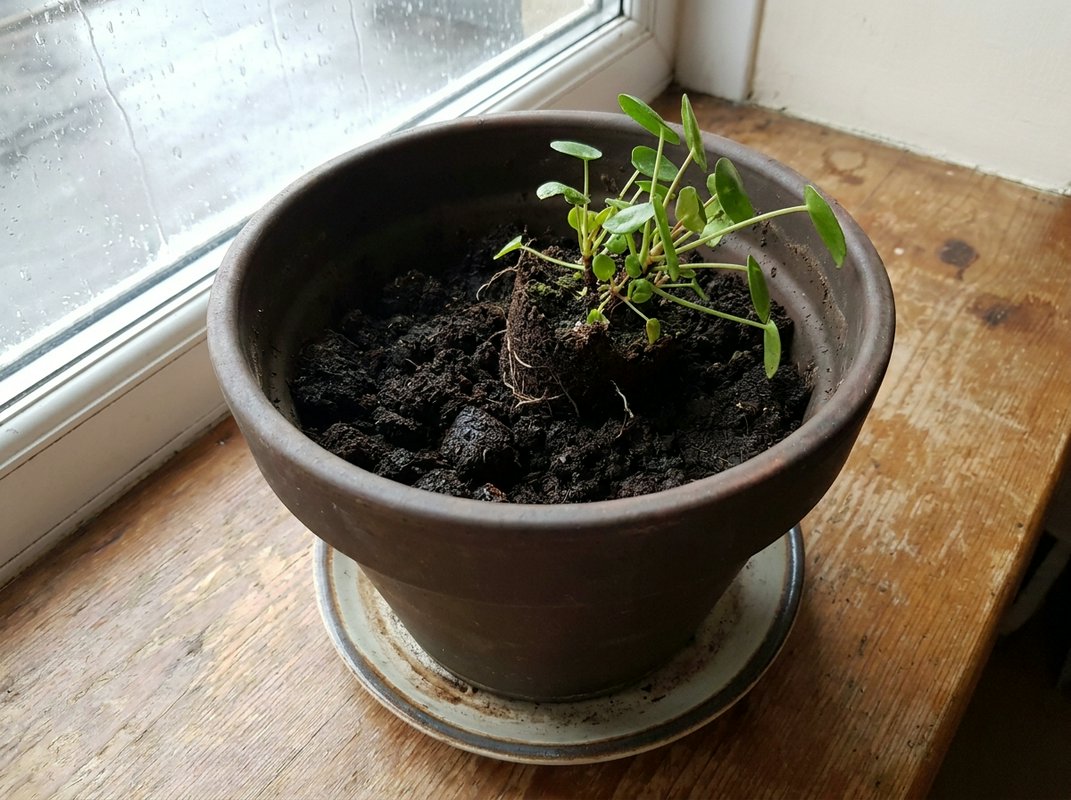
A bigger pot looks like generosity, room for a plant to grow into. But the soil sitting between the root ball and the new pot's walls has no roots in it yet, so nothing is drawing the water back out of it once you have watered.
Every time you water, that outer ring of compost stays wet long after the soil near the roots has dried. The roots sitting closest to it get less oxygen than they need, and the fungi that cause rot spread far more readily through cold, waterlogged soil than through soil a plant is actually drawing on.
The first sign is usually a leaf or two turning yellow and dropping, with the plant looking worse than it did before you repotted it. By the time you tip it out and find roots that have gone brown or black and feel soft, the rot is already established.
A safer move is a pot only a little larger than the one the plant is leaving, typically a few centimetres wider across. That keeps the extra soil close to what the roots will actually fill within a season.
If you want a specific number, the Pot Size Calculator takes your current pot's diameter and the plant's condition and gives back a recommended diameter and volume, with the reasoning behind it. It runs in your browser and the figure it gives can still be wrong for an unusual plant or pot shape, so treat it as a starting point rather than the final word.
Why pots are labelled in litres in one shop and centimetres in another
Walk into a garden centre and the pots on the compost aisle are priced by the litre. Open an online planter listing and the only number on the page is a diameter in centimetres. Both describe the same pot, but a reader trying to compare the two is often left guessing, because volume and width are not the same measurement and one does not translate neatly into the other.
Litres describe how much the pot holds
A litre figure on a nursery pot is a volume, usually matched to the volume of compost a grower would use to fill it. It tells you how much growing medium the pot holds. Two pots with the same litre rating can look quite different on a shelf: a short, wide pot and a tall, narrow one can hold the same volume while suiting completely different plants.
Centimetres describe how wide the pot is
A diameter measurement does the opposite job. It tells you whether a pot will fit on a windowsill, inside a decorative outer pot, or into the gap you have measured on a shelf, but it says nothing on its own about how much soil the pot actually holds. Online retailers favour it because it is the measurement a buyer can check against their own space with a tape measure before anything arrives.
Why there is no single conversion
Because a pot's volume depends on its depth and the shape of its sides as well as its width, there is no fixed sum that turns one measurement into the other. A tall, straight-sided pot and a shallow, flared one can share a diameter and still hold noticeably different volumes of compost. The practical way around this is to treat the two figures as answering different questions: centimetres for whether the pot fits the space, litres for roughly how much compost or how large a root ball it is meant to take. Where a listing only gives one of the two, the other is worth checking before you buy, particularly if you are matching a new pot to a plant's current root ball.
If you already know the diameter of the pot your plant is in now, the Pot Size Calculator can save you the arithmetic: enter that diameter and the plant's condition, and it gives you the recommended new diameter in centimetres alongside the matching volume in litres, so you can shop against either figure with confidence. It runs in your browser and works from the numbers you give it, so it is only as good as the measurement you start with.
Get the size right, then keep it growing well
A pot sized correctly still needs the right light, water and soil behind it. If you're about to repot, the Pot Size Calculator can work out a new diameter and volume from your plant's current pot and its condition, though it's a starting point rather than a guarantee.