
Spider plant care: light, watering, offsets and pot size
What a spider plant needs to stay healthy in a UK home, and how pot size decides whether it produces offsets.
Read more plant care guidesHow much light does a spider plant need?
A spider plant does best within a few feet of a window that gets bright but indirect light, somewhere the room feels light all day without the sun actually landing on the leaves. East- or west-facing windowsills usually give this without any screening needed. South-facing glass in a British summer can be strong enough at midday to scorch the leaf tips, so a sheer curtain or a spot set back a little from the glass does the job there.
It copes further from the window too
Move a spider plant into a hallway, onto a north-facing shelf or further back into a room and it will keep going, just more slowly. The leaves lose some of their striping and growth slows, but the plant does not sulk the way a lot of houseplants do when the light drops. That tolerance is part of why it turns up in offices and rented flats where the light is whatever it is and nobody is rearranging furniture to chase the sun.
A spell outside in summer
A spider plant is one of the few houseplants that genuinely benefits from going outside once the British summer has settled in. A shaded or dappled spot, under a tree or against a wall that is out of direct sun for most of the day, suits it well, and the brighter, more varied light outdoors tends to thicken the leaves and perk the plant up compared with months spent indoors. Bring it back in before the nights turn cold in autumn, since it has no tolerance for a cold snap outside the growing season.
How often should you water a spider plant
Check the compost before you water a spider plant. Push a finger in to about 2 to 3 centimetres, and water only once that top layer has dried out. In a lot of UK homes that works out to roughly once a week during spring and summer, stretching to once every two to three weeks over a British winter, when light is low and the plant isn't growing much.
Why it copes with a missed watering
A spider plant keeps a reserve of water in thickened, fleshy roots, sometimes sold or described as tubers, that run under the compost. Those roots act a bit like a store cupboard, which is why a slightly dry pot doesn't show much stress and a plant can go longer between waterings than most houseplants without complaint.
That same storage system makes wet compost the bigger risk. Roots designed to hold their own water don't need to sit in more of it, and compost that stays damp around them for too long is what leads to rot. If you're not sure how long a pot takes to dry between waterings, the drainage guide covers how pot type and drainage holes change that timing.
Why a snug pot grows more babies
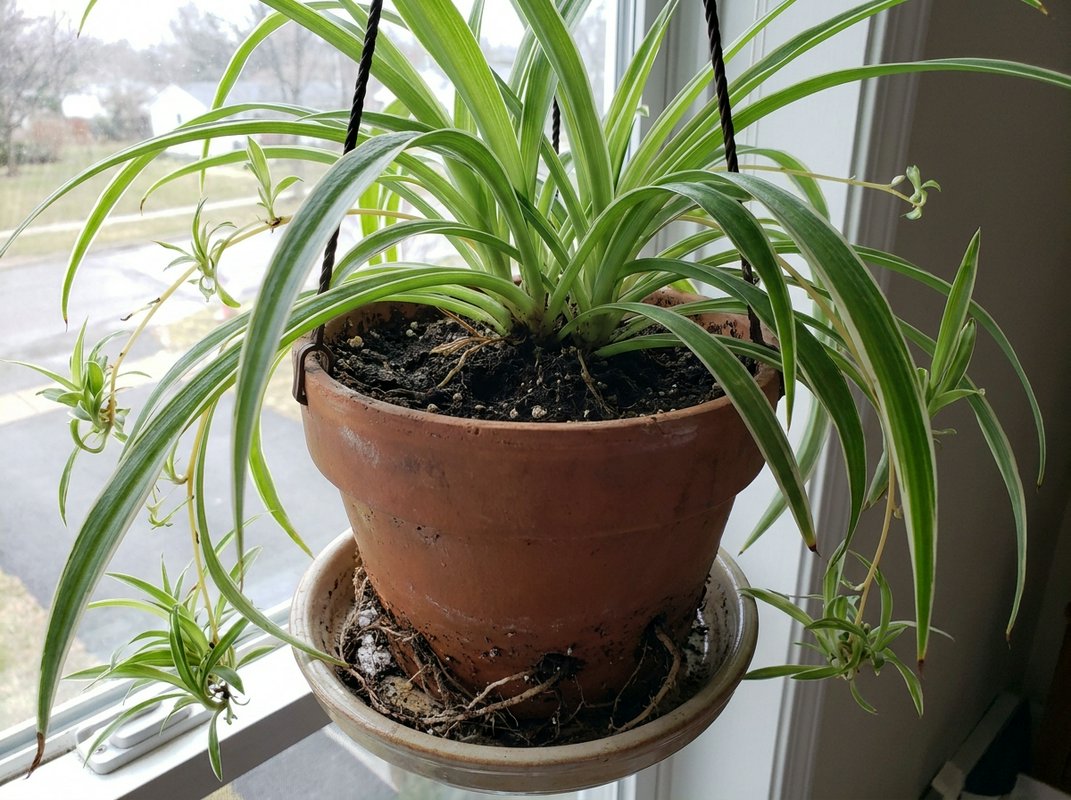
A spider plant that has filled its pot with roots is not in trouble. Being root-bound (roots that have filled the pot and started circling the inside) is close to the trigger that pushes this plant into flower, and the flowers are followed by the small plantlets that hang off runners. A plant with room to spare round its roots tends to put that energy into leaves instead, and the offsets slow down or stop.
This is why repotting on a schedule can work against you. If you move a spider plant into a pot much larger than the one it has outgrown, the roots spend the next while filling the new space before they do anything else. A pot-up of around 2 to 3 centimetres in diameter keeps the roots working without giving them so much spare soil that the plant stops bothering with offsets. The point to pot up at all is when roots are visibly circling the inside of the pot or pushing up through the drainage hole.
If you want the plantlets, the practical rule is to leave it slightly cramped and only size up when the roots genuinely have nowhere left to go. The guide to choosing planter size covers how to judge that by eye and by the centimetre rule, and the same reasoning about moisture round unused soil appears in the wider drainage guide.
Common problems: brown tips, pale leaves and root rot
A spider plant that looks off is usually telling you something specific about water, light or the pot it's sitting in. Each of the common problems has a distinct cause, and each has a fix you can apply without guesswork.
Brown tips
Brown, crispy tips on an otherwise healthy plant are almost always a reaction to tap water. Spider plants are sensitive to the fluoride and chlorine most UK water suppliers add, and the leaf tip, being the oldest and most exposed part of the leaf, shows the damage first. Switching to rainwater, or leaving tap water to stand uncovered for 24 hours before use, usually stops new tips forming. The brown tips already there won't turn green again, but you can snip them off with clean scissors without harming the leaf.
Pale leaves
Pale, washed-out leaves with less of the plant's usual striping point to too much direct sun. Spider plants are native to shaded forest floors, and strong direct light bleaches the chlorophyll out of the leaf before the plant can replace it. Moving the pot back from a south or west-facing windowsill, or behind a net curtain, is usually enough to bring the colour back over the following weeks.
Root rot
Soft, blackened roots and a sour smell from the soil mean the roots have been sitting in water they can't use, and that almost always traces back to a pot with no drainage hole or a saucer that's never emptied. Spider plants store water in their fleshy roots and cope far better with being left dry than with sitting wet, so a pot without an escape route for excess water does more harm than an occasional missed watering. Checking that the pot has a drainage hole, or that a decorative outer pot is being used with a liner, is worth doing before you even think about watering schedule. More on getting drainage right is covered on the drainage guide.