
Snake plant care in the UK: watering, pot material and how little light it really needs
A guide to keeping a snake plant healthy through a British winter, covering how often to water it, which pot suits it best, and what a dim corner of the room actually means for it.
Read more plant care guidesDoes a snake plant need bright light?
A snake plant will survive in a room that gets almost no direct light at all, which is why it ends up recommended for every dim corner and windowless hallway going. That reputation is earned, but it tells you what the plant will tolerate, not what it needs to do well. Give it indirect light and it grows noticeably faster and the leaves hold a stronger colour.
What tolerance actually looks like
In low light a snake plant does not die, it just slows right down. New leaves take longer to appear, and the plant can go through a British winter without producing anything new at all. That is the plant coping, not thriving, and it is worth knowing the difference so you are not left wondering whether something has gone wrong when nothing has.
What a north-facing room means in practice
A north-facing room never gets direct sun, so the light is softer and flatter through the day, and in a UK winter the hours of usable daylight are short to begin with. A snake plant will cope with this, but placing it close to the window still makes a visible difference to how it grows. Direct sun is a separate issue: a south or west-facing windowsill can expose the leaves to strong afternoon sun, which is harder on this plant than low light ever is.
For a fuller picture of what grows well where in a typical British flat, the room-by-room guidance on plants for British rooms covers north-facing spaces, bathrooms and offices alongside the light levels each one actually gets.
How often to water a snake plant
A snake plant stores its own reserves of water in those thick, upright leaves, which is why the compost needs to dry out properly before you water it again. Soak it through until water runs from the base, then leave it alone.
In a centrally heated British winter, with daylight short and growth slowed almost to nothing, that often means three to four weeks between waterings. A warm, dry flat will dry the compost faster than an unheated spare room, so the exact interval depends on where the pot actually sits.
Why this plant dies from too much water
Snake plants come from arid parts of the world, and their roots rot in compost that stays wet for weeks on end. Overwatering is the single commonest cause of death in this plant, and it usually happens in winter, when a grower keeps watering at the summer rate out of habit.
Checking before you water
- Push a finger or a thin stick down to the bottom of the pot, and only water once it comes out dry.
- Feel the base of the leaves for any softness, since give at the base is usually a sign there is already too much water sitting around the roots.
- Shorten the interval in a cool, bright room where the plant is actually growing, and lengthen it in a dim or unheated one where it is doing very little.
How well a pot drains has a direct bearing on how forgiving this routine is, which the drainage guide covers in more detail for pots with and without a drainage hole.
Why terracotta suits a snake plant
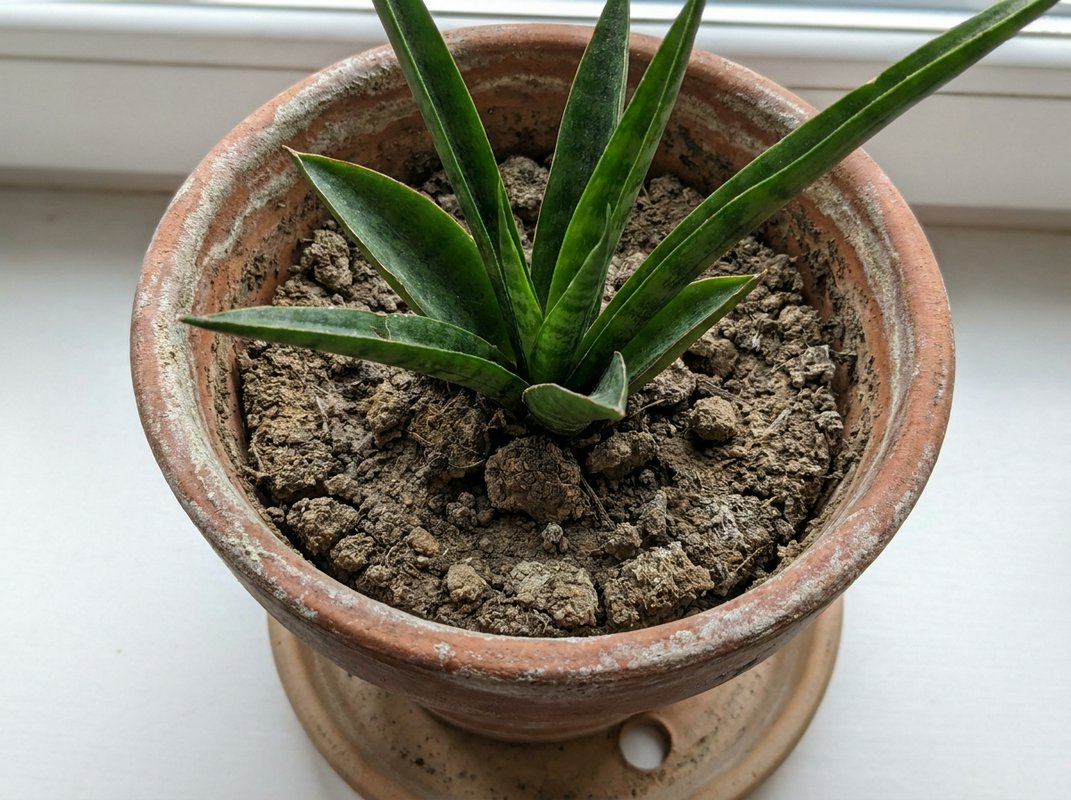
A snake plant stores water in thick, upright leaves, which means its roots want to dry out between drinks. Terracotta helps with that because it's porous: moisture moves out through the clay walls as well as evaporating from the soil surface, so the whole pot dries faster than a glazed or plastic one of the same size. Paired with a drainage hole so any excess water has somewhere to go, that makes terracotta the material best matched to how this plant actually uses water.
A sealed ceramic pot with no hole can still hold a snake plant, but it removes the margin for error. Without anywhere for water to escape, a slightly generous watering sits at the bottom of the pot against the roots, and that's where rot usually starts. Terracotta with drainage gives the plant two ways to shed excess moisture.
If you already have a decorative pot without a hole that you want to keep using, a terracotta liner pot inside it does the same job: the plant sits in the material suited to it, and the outer pot stays purely decorative. For the full comparison of how terracotta, ceramic and other materials behave with different plants, the planter material guide goes through each one in turn, and the drainage guide covers liner setups in more detail.
Why is my snake plant mushy, yellow or leaning?
A soft, mushy base
Press gently at the base of the leaves, where they meet the soil. If it gives like a wet sponge, or the leaf comes away in your hand with a sour smell, that's rot. Check the soil at the same time: push a finger in to about 5cm. If it's still damp from a watering more than a week or two ago, the roots have been sitting in wet soil for long enough to start breaking down. A snake plant stores water in its leaves and does not need the soil to stay moist between waterings, so a mushy base almost always traces back to watering too often.
Once the base has gone soft, the affected leaf will not recover, and it is worth lifting the plant out of its pot to look at the roots underneath, since a drainage problem rather than watering habit is sometimes the real cause.
Yellowing leaves
Check the soil moisture before anything else: a finger pushed in to 5cm that comes out damp, in a pot that was watered within the last week or two, points to overwatering as the cause. Yellowing in a snake plant is rarely about light, since the plant tolerates low light well, and it is rarely about feeding. It is the leaf's response to roots that cannot take up water properly because they are sitting in soil that never dries out.
A single yellow leaf low down on an otherwise healthy plant is not unusual and can simply be cut away at the base. Yellowing spreading across several leaves at once, especially alongside a soft base, is the watering pattern to change.
A leaning plant
Before assuming the plant needs staking, check two things. First, tip the pot slightly and look at the roots through the drainage hole: if they are circling tightly or pushing up at the soil surface, the plant is root-bound and has outgrown the pot it's in, which leaves it without enough anchorage to stay upright as the leaves get taller. Second, check the base for the same softness described above, since rotted roots lose their grip on the soil just as surely as a pot that's too small.
If the roots are tightly wound and filling the pot, moving up one pot size resolves the leaning along with the restricted growth. Guidance on choosing that next size by diameter and litres is covered on the planter size page, and if the lean turns out to be rot, the fix is a drier watering routine and, often, a pot with a proper drainage hole, which is covered on the drainage page.